The Dangers of Appeasing the Crowd
LEADERSHIPMOBSOCRATES
Leadership is not about appeasing a crowd. The true purpose of leadership is to move a group of people from where they are to where they are supposed to go, where they need to be. But in such a world as this, how would anybody know where to begin? How is a leader to determine the people’s location? How is a leader to recognize the appropriate route for them and what they are supposed to accomplish? This guidance comes from above, but the vision must be apprehended and articulated by a mediator: the proper leader.
In history and legend, the rightful ruler is often discovered based on demonstrated capabilities that make the candidate uniquely well-suited to lead in that respective time and place. I think of this as a sort of “glass slipper” phenomenon: it only fits the right foot. Merlin endorses Arthur’s divinely granted sovereignty after he draws the sword from the stone. Alexander fulfils the oracle’s prophecy by slicing through the Gordian knot. Rafiki paints an image of Simba on his tree, publicly declaring him the rightful heir. David slays the giant Goliath and then humbly waits to receive his place on Israel’s throne after Samuel anoints him king. This is what the ideal pattern looks like: the prophet/sage/druid/shaman (representing divine vision or Spirit) anoints the future leader, then the people respond with “long live the king!”. Appointment from above, acknowledgement and consummation from below. The people are unified and all is right in the kingdom.
Rumor has it that, in some ancient cultures, a future ruler could confirm his right to the throne by harnessing the energy of two wild horses, getting them to pull in the same direction. That is precisely what effective leaders do: hold and manage tension, balance extremes, and channel energy in the appropriate way. They must possess a deep present awareness and secure resolve, committed to the truth and humbly aligned with the path that promises the best outcome for the people they lead.
A leader must also understand that it’s impossible to placate every individual in a group and that if they try, they’ll end up pleasing no one. They must be able to adhere to the vision they’ve been given and move the people toward a higher existence, even when some of those people do not like or agree with the movement. Leaders who are very agreeable (Big Five personality trait) may have a difficult time internalizing this concept as they are likely to prioritize relational connection over most other things, like driving difficult change. Because of this, I encourage leaders to develop some level of trait disagreeableness (which should not be confused with abrasiveness or lack of empathy).
In trying to “lead” a group of people by crowd-pleasing, a leader’s attempts to anticipate the desires of the people will interfere with his ability to read his own “compass”. This leader’s navigational fixes are likely to be both scattered and shifting. He will be unable to identify a coherent path toward an elevated mode of being for the group. This approach to “leadership” is likely to render a people adrift; lost with no sense of identity or bearing.
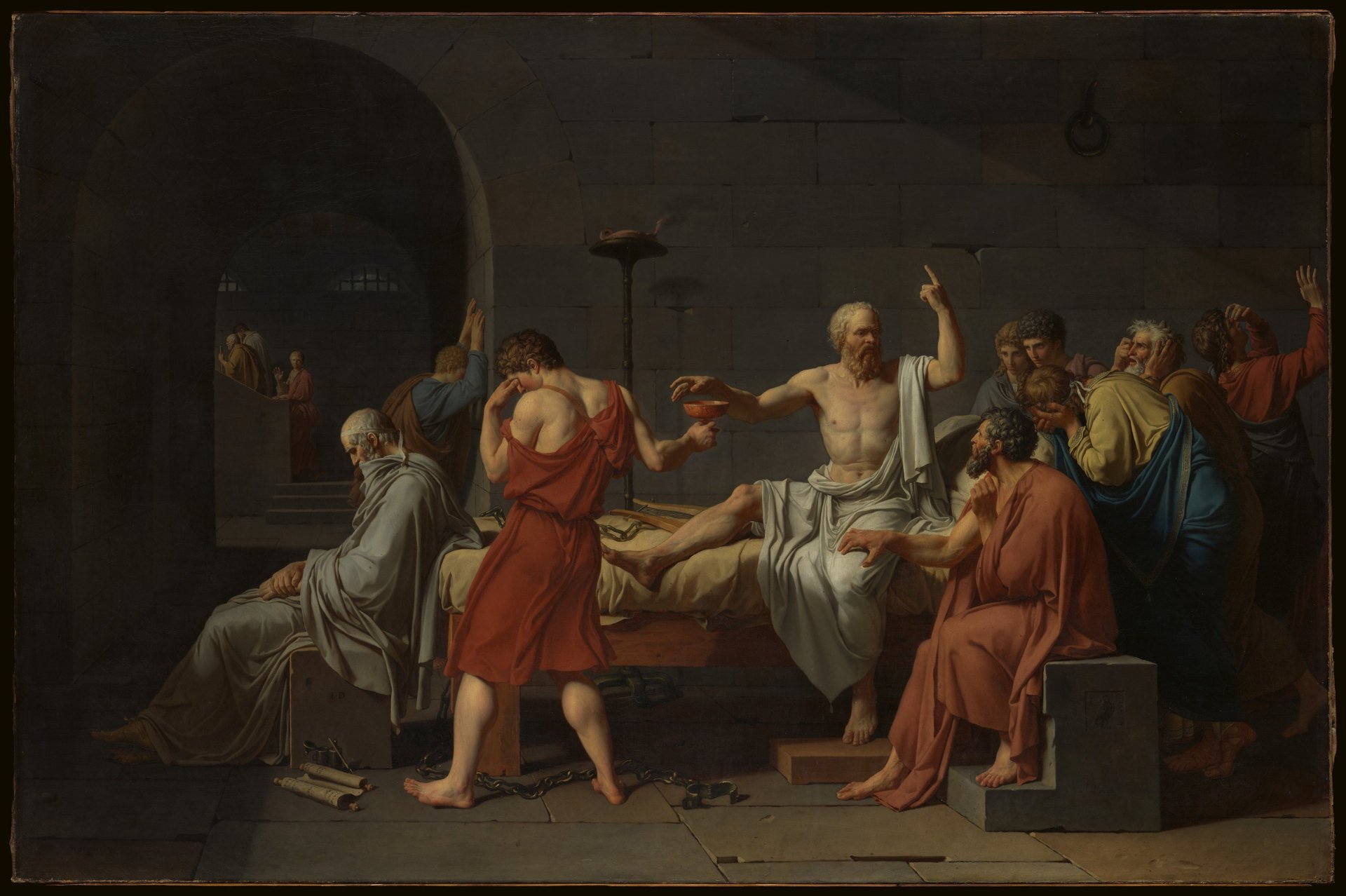
An even more pervasive danger, though, is the tsunami of “mob mentality”. When misguided, a group of people can often develop a psychopathic personality and become a mob, possessed by its own unhinged whims and passions. It’s easy for individuals within such a group to be swept away in the mob’s wave, abdicating their responsibility to speak truth and embody what is right. If you’re unaware of the prominence of mob mentality and how easy it is for individuals to succumb to group behavior, you can do some quick research on the Asch conformity experiments or read Christopher Browning’s Ordinary Men (1992). Pontius Pilate is certainly familiar with the savagery of the mob and the cost of trying to placate it. After all, the mob drove the death of both Jesus and Socrates.
In Plato’s dialogue Gorgias, Socrates leaves the audience with a simple question: does the good leader give the people what they want or does the good leader give the people what is best for them?

DONEC CIVITATEM AUREAM VIDEAMUS
"Until We See the Golden City"
All site contents copyright © Alvero, LLC 2025